Message
The School Health Project for all Cambodian Children (SHCC), implemented by Tokyo Gakugei University with support from The Nippon Foundation, began with a preparatory period in 2019 and has been carried out for as long as seven years, through December 2025. This December marks the completion of Phase 1 of the project under Tokyo Gakugei University. Phase 2 will begin in January 2026, and will continue under the School Health Training and Ecohealth Promotion Foundation (STEP), a general incorporated foundation. The project will continue its efforts to strengthen the educational foundation for school health at Cambodia’s teacher education universities.
I believe that improving Cambodian society requires neither a top-down nor a bottom-up approach, but rather middle-up and middle-down. In terms of school health education, teacher education universities should serve as the central hub: proposing policies on school health and teacher training to the government, while at the same time sending teachers to local schools to improve the health of children and communities in rural areas. I believe that strengthening this middle layer is the key to improving the health of Cambodia’s nation, society, and people. This is why the management teams of PTEC and BTEC, as well as the SHCC teaching staff, are vital partners for the SHCC project.
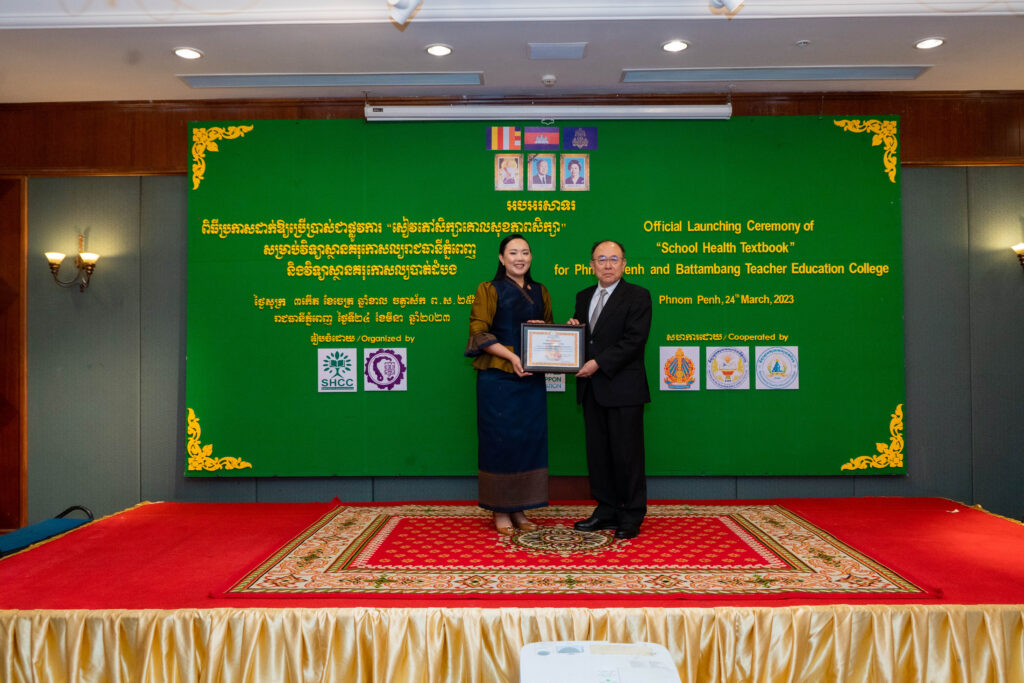
Based on this vision, over the past six years, with support from The Nippon Foundation, the project spent three years developing a comprehensive school health textbook for the primary education curriculum, totaling more than 300 pages. A guidebook for instructors was also created. In 2022, a two-credit school health course was introduced into the primary education programs at PTEC and BTEC. A total of 1,200 students up to the current fourth cohort have studied health. Of these, 900 students from the first three cohorts are now working across Cambodia as teachers capable of teaching health. According to our survey, currently about 30% of graduates are teaching health in schools. We hope to raise this number in cooperation with the Ministry of Education and TEC in order to contribute to improving the health of Cambodian children.
We also created a condensed school health textbook for junior high school general education majors. Beginning in 2025, a one-credit school health course has been introduced as a liberal arts subject for junior high school students, and a total of 304 third- and fourth-cohort students at PTEC and BTEC have studied health.
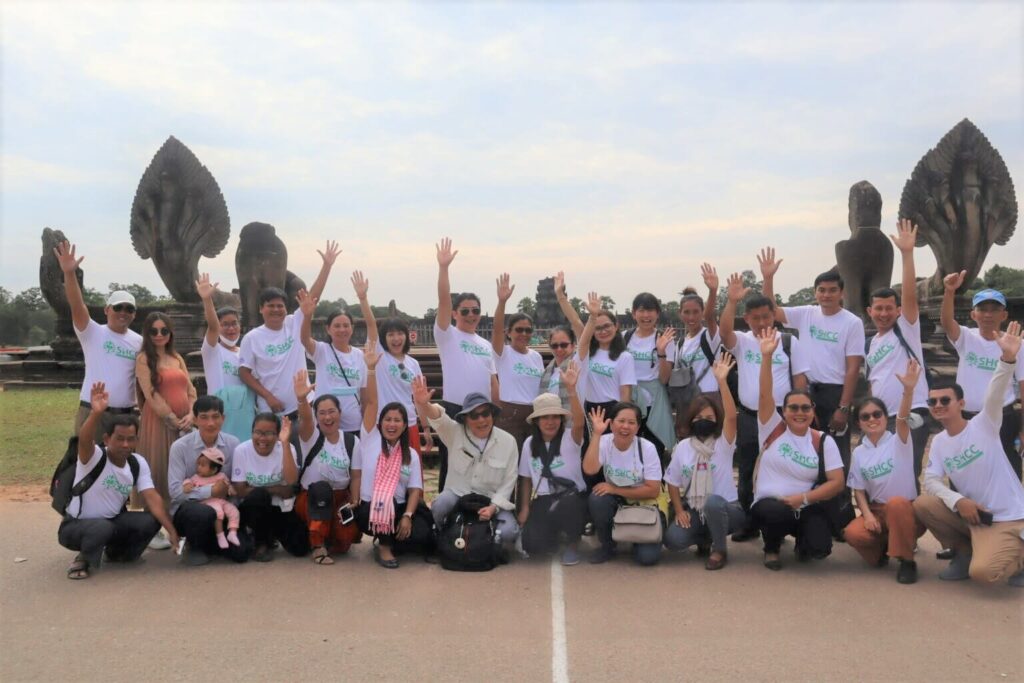
To build the capacity of instructors who teach school health, we held 25 training sessions between March 2020 and November 2025—equivalent to 60 days or 480 hours. A total of 23 PTEC and BTEC school health instructors participated, with several attending all 25 sessions. Four training programs were also held in Japan, and all 23 instructors took part.
Together with KIZUNA and Social Compass, we created picture-story shows (kamishibai) on health for junior high school students. The SHCC project team also contributed to the development of a health room manual for junior high schools. Furthermore, to enhance not only health knowledge but also overall educator competence, we produced a Social and Emotional Competency card game for good teaching practice.
Phase 2 will begin in 2026, with the NGO STEP continuing SHCC activities under the support of The Nippon Foundation. The ultimate goal of Phase 2 is to establish a School Health Course within the junior high school teacher training programs at PTEC and BTEC. To ensure that the children who will shape the nation’s future are healthy, it is essential to train teachers who can deliver comprehensive school health education. We will also support the introduction of school health into the newly established TEC, strengthen school health practicum programs at affiliated schools, and pursue other new initiatives. Training for school health instructors will continue as before. Achieving these goals would be impossible without the cooperation of the Ministry of Education and TEC, and likewise impossible without financial and other support from The Nippon Foundation and other partners.
As STEP, we also aim to expand new school health support initiatives, particularly in ASEAN countries. We sincerely appreciate the understanding, cooperation, and support of everyone visiting this website.
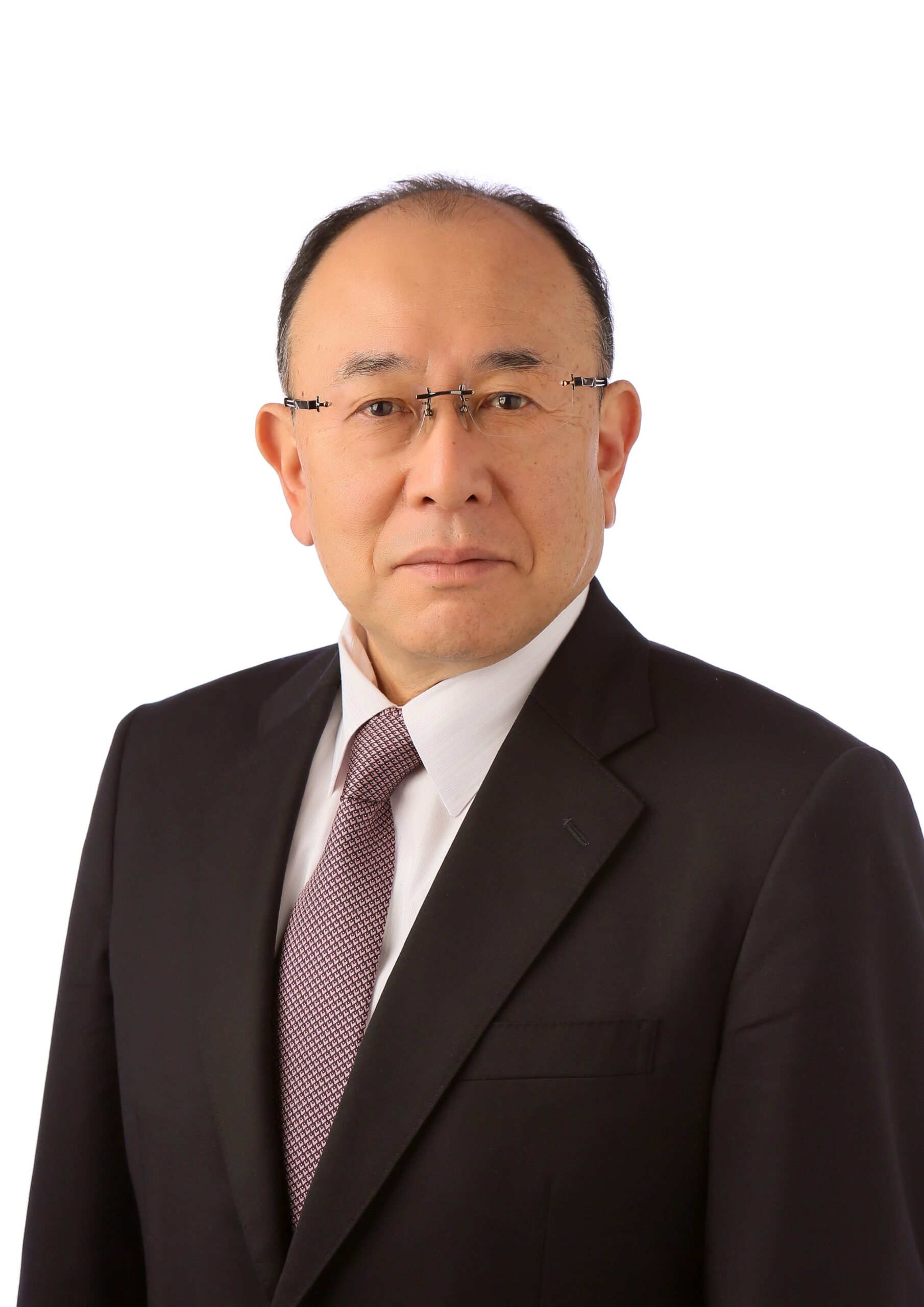
Takashi ASAKURA